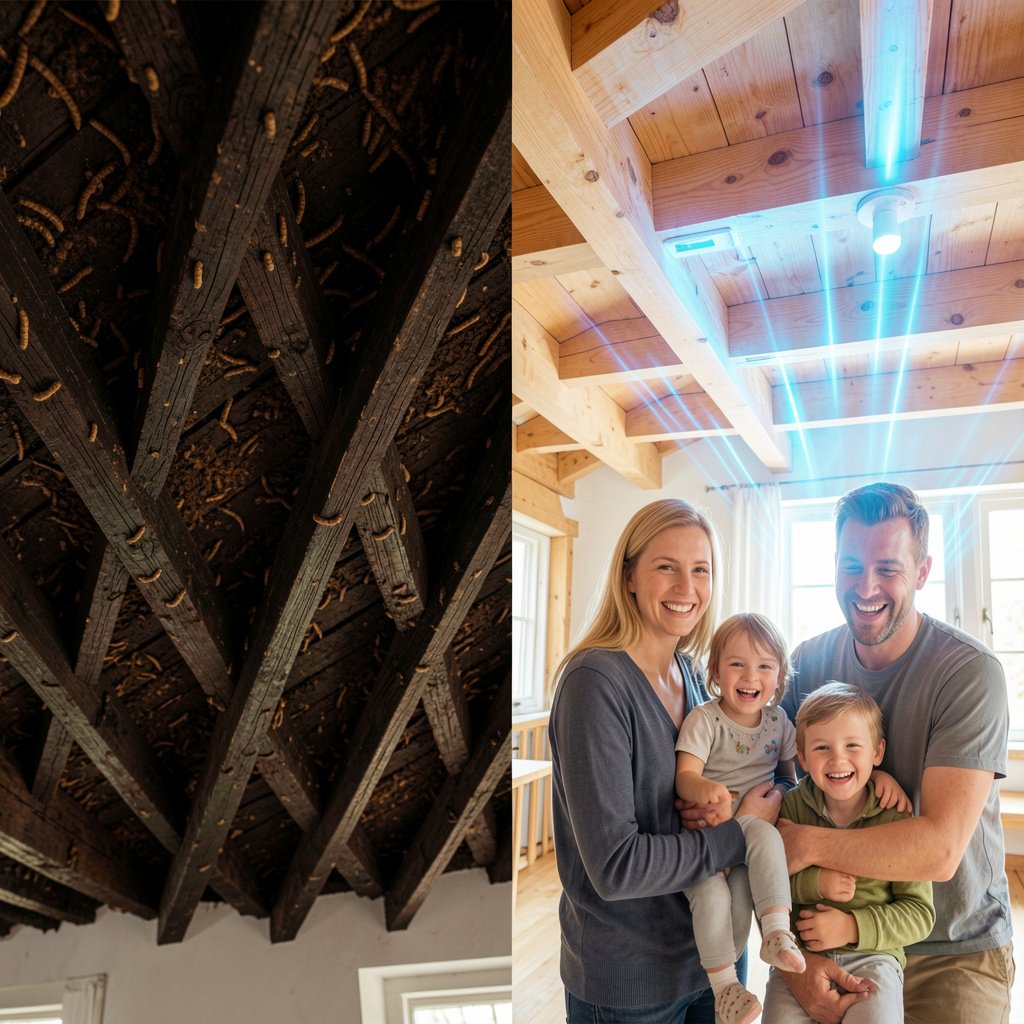
Discovering a woodworm infestation can be worrying, especially if your home contains large amounts of timber. Many homeowners immediately wonder whether the entire house needs treatment or if it’s possible to focus only on the affected areas.
The answer depends on several factors, including the extent of the infestation, the type of wood-boring insect involved, the condition of the timber, and the results of a professional inspection. In many cases, treating the entire wooden house is not necessary. Modern technologies, such as Shashel microwave woodworm treatment, allow professionals to target active infestations with precision rather than automatically treating every wooden component.
Understanding How Woodworms Spread
Woodworms are the larvae of wood-boring beetles.
Adult beetles lay eggs on or near suitable timber. After hatching, the larvae tunnel into the wood and feed on cellulose, often remaining hidden for several years before emerging as adult beetles.
Common locations include:
- Roof beams
- Floor joists
- Ceiling timbers
- Timber framing
- Staircases
- Wooden flooring
- Structural supports
- Antique furniture
An infestation in one area does not necessarily mean that every piece of timber in the house is affected.
Why a Professional Inspection Comes First
Before deciding on any treatment, the first step is to determine:
- Whether the infestation is active
- Which areas contain active insects
- The extent of the infestation
- The type of timber involved
- Whether any structural damage is present
Old exit holes alone do not always indicate an active infestation. A professional assessment helps identify where treatment is actually needed.
Do All Wooden Homes Need Whole-House Treatment?
Not necessarily.
Many infestations are localized to specific sections of a building.
For example, woodworms may be concentrated in:
- A damp roof space
- One section of timber framing
- A single floor structure
- Window frames
- An attic beam
- Individual pieces of wooden furniture
If the infestation is confined to these areas, targeted treatment may be sufficient.
Only a detailed inspection can determine whether localized treatment or a broader approach is appropriate.
Why Targeted Treatment Can Be Effective
Modern woodworm control has moved toward more precise treatment methods.
Instead of automatically applying chemicals throughout an entire building, professionals often focus on the areas where active insects are present.
Shashel microwave technology supports this approach by using carefully controlled non-ionizing microwave energy to treat affected timber directly.
This helps concentrate treatment where it is needed rather than applying unnecessary treatment to unaffected areas.
How Microwave Technology Works
Microwave treatment uses established scientific principles instead of chemical pesticides.
Wood-boring insects contain considerably more moisture than dry, seasoned timber.
As controlled microwave energy passes through the wood:
- Moisture-rich insects absorb the energy more efficiently.
- Their internal temperature rises.
- Active insects within the treated area can be eliminated.
The treatment can target:
- Eggs
- Larvae
- Pupae
- Adult beetles present within the treated timber
Because the treatment is directed at specific areas, it complements a targeted treatment strategy.
When Larger Areas May Require Attention
Although many infestations are localized, there are situations where more extensive treatment may be recommended.
Examples include:
- Multiple active infestation sites throughout the property
- Extensive timber framing with widespread activity
- Long-term untreated infestations
- Large heritage structures with interconnected wooden elements
- Buildings where inspections reveal activity in numerous locations
The scope of treatment should always be based on inspection findings rather than assumptions.
The Benefits of Avoiding Unnecessary Treatment
Treating only the affected areas, when appropriate, offers several advantages.
These include:
- Reduced disruption during the project
- Preservation of unaffected timber
- Efficient use of treatment resources
- Focused attention on active infestations
- A more tailored treatment plan
Every property is different, so treatment should be matched to the specific conditions of the building.
Preventing Future Infestations
Even after successful treatment, preventing future woodworm problems remains important.
Good maintenance practices include:
- Repair roof leaks promptly.
- Fix plumbing leaks.
- Improve ventilation.
- Reduce indoor humidity.
- Inspect timber regularly.
- Investigate new exit holes or fresh frass.
Keeping timber dry and well maintained makes it less attractive to many wood-boring insects.
Suitable for Many Types of Properties
Targeted microwave treatment can be used in a wide range of buildings, including:
- Family homes
- Timber-framed houses
- Historic buildings
- Apartments
- Museums
- Churches
- Commercial properties
- Agricultural buildings
Each project begins with an assessment to determine the most appropriate treatment plan for that specific structure.
Preserving Valuable Timber
One of the main goals of modern wood preservation is to retain original materials whenever possible.
Rather than replacing sound timber unnecessarily, professionals aim to eliminate active infestations while preserving existing wooden structures.
This is especially valuable in:
- Heritage buildings
- Historic homes
- Antique furniture
- Traditional timber construction
By targeting active wood-boring insects without relying on routine chemical application, Shashel supports responsible timber preservation.
Questions to Ask Before Treatment
If you’re considering treatment for a wooden home, it can be helpful to discuss the following with your service provider:
- Is the infestation active?
- Which areas require treatment?
- How was the infestation identified?
- Is localized treatment appropriate?
- Will follow-up inspections be recommended?
Understanding the answers helps ensure that the treatment plan is based on the actual condition of the property.
Conclusion
Finding woodworms in your home does not automatically mean the entire building needs treatment. Many infestations are confined to specific areas, making targeted treatment a practical option after a thorough inspection.